

What starts as a rejection of easy convenience becomes a direct study of waste, consumption, and ecological impact. By replacing brand new art supplies with reclaimed scraps: such as egg cartons, coffee carriers, and packaging waste, this project highlights how our everyday habits mirror the destruction of natural habitats.
Through hands-on material struggles, it explores how confronting physical waste reshapes our perspective and drives a deeper awareness of the planet we share.
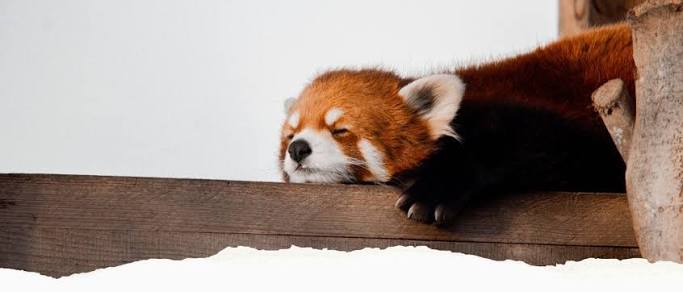
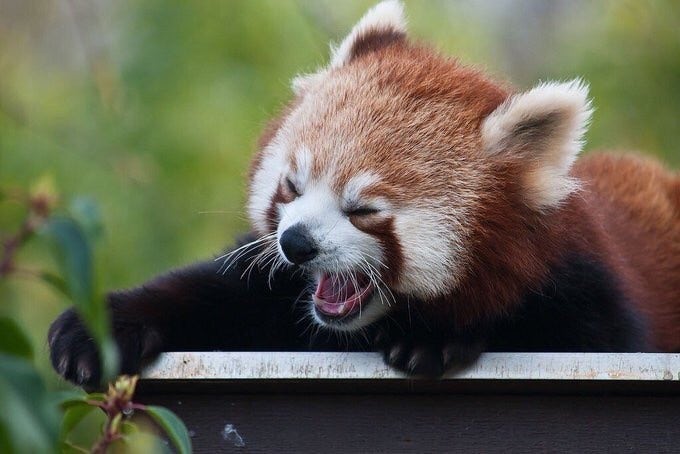
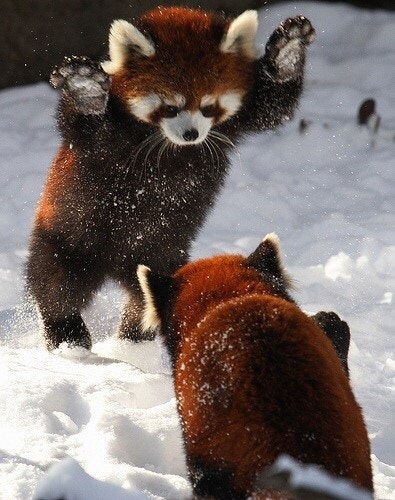
Red pandas, like giant pandas...
The Red panda is a small, tree dwelling mammal native to the high altitude temperate forests of the Eastern Himalayas and southwestern China. Living primarily in the forest canopy, it relies heavily on dense bamboo understories, which make up about 95 to 98 percent of its diet.
What's really fascinating is their evolutionary background. As the sole living member of the Ailuridae family, their taxonomic position was debated for a long time. Back in 1825, they were first lumped in with the raccoon family because of physical resemblances, and later temporarily grouped with bears due to genetic overlaps. Modern DNA research, however, finally placed them in their own independent family (Ailuridae), showing they are an ancient carnivoran species most closely related to skunks, raccoons, and weasels.
To survive in harsh, rugged mountain habitats, red pandas have evolved some incredible physical adaptations. They have a modified wrist bone that acts as a false thumb for gripping bamboo, flexible ankles that rotate 180 degrees so they can climb down tree trunks headfirst, a long bushy tail for balance and warmth, and the ability to drop into temporary torpor to save energy during extreme cold.
Right now, red pandas are listed as Endangered on the IUCN Red List. Researchers estimate that wild populations have dropped by about 40 percent over the past two decades, leaving fewer than 2,500 individuals left in the wild. The main challenges they face include habitat loss and fragmentation from logging, firewood collection, farming, and human expansion which leads to isolated populations and inbreeding. On top of that, they deal with human interference, livestock competing for food, land clearing destroying their shelter, and climate driven bamboo shortages that make it even harder for them to find enough nourishment. Furthermore, domestic dogs transmit fatal diseases like canine distemper. While pelt and meat poaching has thankfully decreased, the illegal pet trade across Asia is unfortunately on the rise. All of this is compounded by climate change and weak law enforcement.
Conserving red pandas isn't easy because they are very picky about their environment, needing specific altitudes, water sources, forest cover, and steady bamboo growth. Even though they are legally protected across their range countries, illegal logging and grazing still happen inside protected areas. To tackle this, the IUCN outlines four main priorities: protecting habitats, reducing degradation, stopping human caused deaths, and raising public awareness.
Fortunately, global conservation efforts are in full swing. In Nepal, the Red Panda Network employs local 'Forest Guardians' to protect habitats, while organizations like the WWF track wild populations. Zoos also play a vital role as an insurance policy against extinction: the Smithsonian's National Zoo has successfully bred over 100 cubs since 1962 to maintain self sustaining populations.
Organizations like the Wildlife Conservation Society (WCS) and the Bronx Zoo are huge in driving public awareness and support. You can actually spot red pandas right at the Bronx Zoo in their Himalayan Highlands and Wild Asia Monorail exhibits. Plus, the zoo hosts major events like the annual WCS Run for the Wild, bringing together over 5,000 participants to raise crucial funds and community awareness to protect endangered species like the red panda.
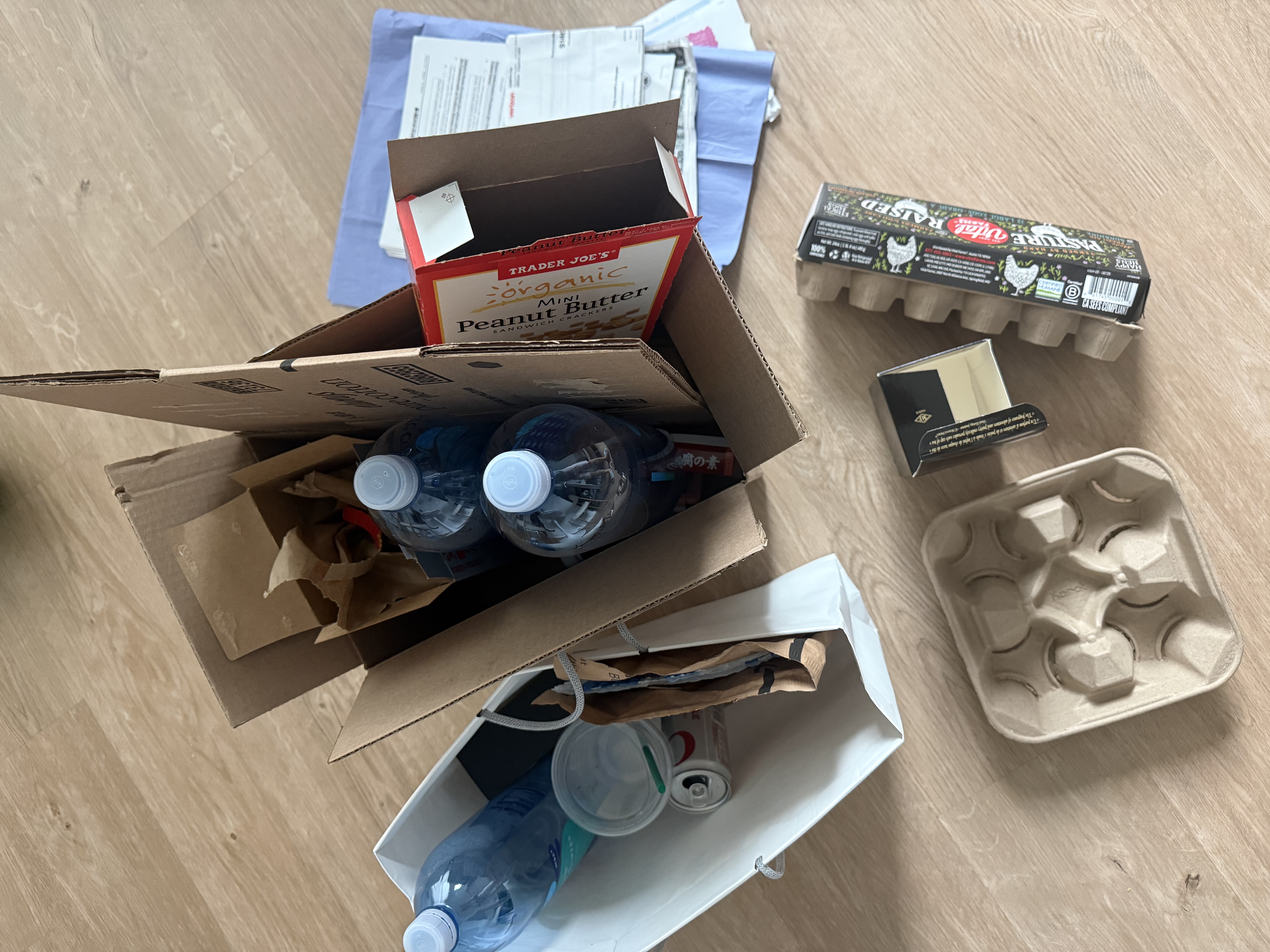
The materials - Paper pulp
For my material investigation, I focused on paper pulp, which I used from egg cartons to build my red panda's body structure.
Paper pulp is a soft, is a soft, fibrous substance made primarily from cellulose (the natural building block separated from lignin, the plant's 'glue'). It's made from a variety of inputs: structural softwoods like pine or spruce give products heavy duty strength (like for cardboard boxes and grocery bags), while short fibers from hardwoods like eucalyptus add smoothness and softness (like for writing paper or tissues), alongside recycled paper and specialty plants like bamboo.
Historically, true plant pulp paper originated in China around 105 AD, but the modern wood based industry took off in the mid-19th century when Europe and North America needed a solution for rag shortages.
Producing it requires massive resources including heavy timber, fresh water, energy, and chemicals through methods like the chemical Kraft process, mechanical grinding, or recycled repulping. Originally, pulp was developed just for writing and printing texts, but today it is processed into an incredible variety of goods, ranging from corrugated shipping boxes and paper bags to personal care items like diapers and menstrual products using fluff pulp, and even tech components like nanocellulose computer screens.
However, it quickly becomes waste due to short consumer lifespans, industrial byproducts like wastewater sludge, and the physical limit that paper fibers degrade and lose their bonding capability after roughly 5 to 7 recycling cycles. While clean paper can theoretically be recycled, composted, or burned in biomass boilers for energy recovery, a huge portion ends up as municipal solid waste, making up about 25 percent of what goes into landfills or incinerators. Ultimately, this entire lifecycle triggers severe environmental consequences: unsustainable wood harvesting drives deforestation and habitat fragmentation, directly threatening endangered wildlife like the red panda in high-altitude forests, while the heavy manufacturing process consumes intense water and energy, and paper rotting anaerobically in landfills releases potent methane gas contributing to climate change.
Process
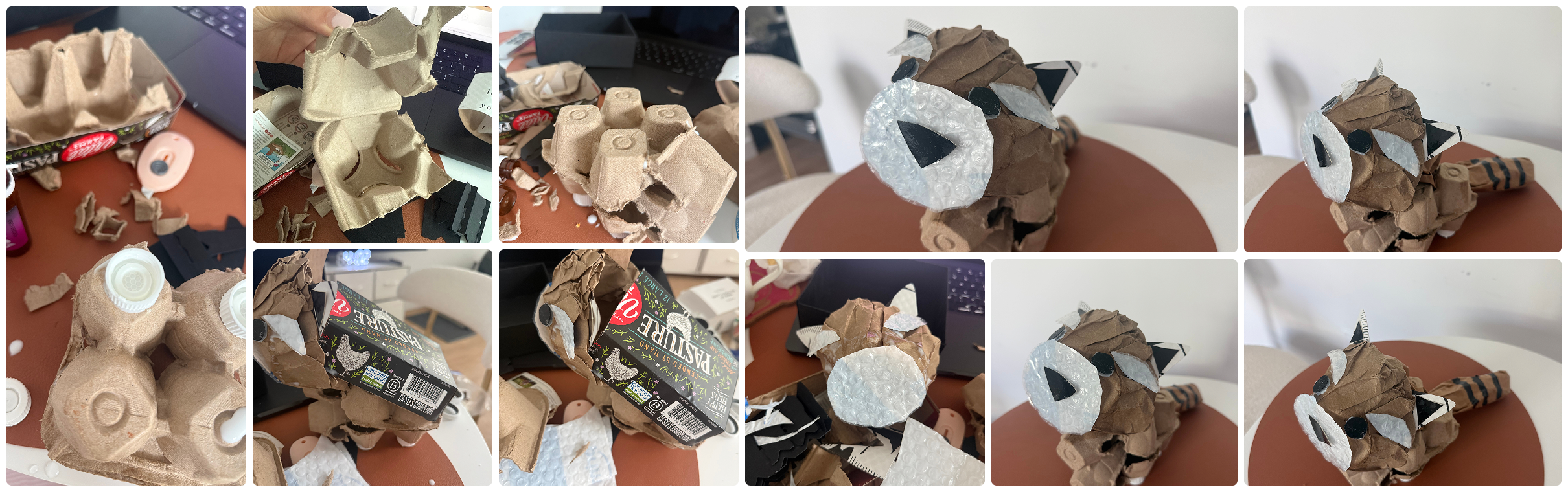
When I first started this project, I honestly had no idea where to begin. My initial thought was to just order some airdry clay online, assuming it would be the easiest and fastest way to sculpt a red panda. But as I sat with our core theme, how human waste and habitat loss are destroying red pandas and their bamboo forests...it suddenly felt hypocritical. Buying brand new materials just to make a sculpture about environmental advocacy would only create more unnecessary waste. That’s when I pivoted, looking around my room to gather what I had already thrown away or accumulated.
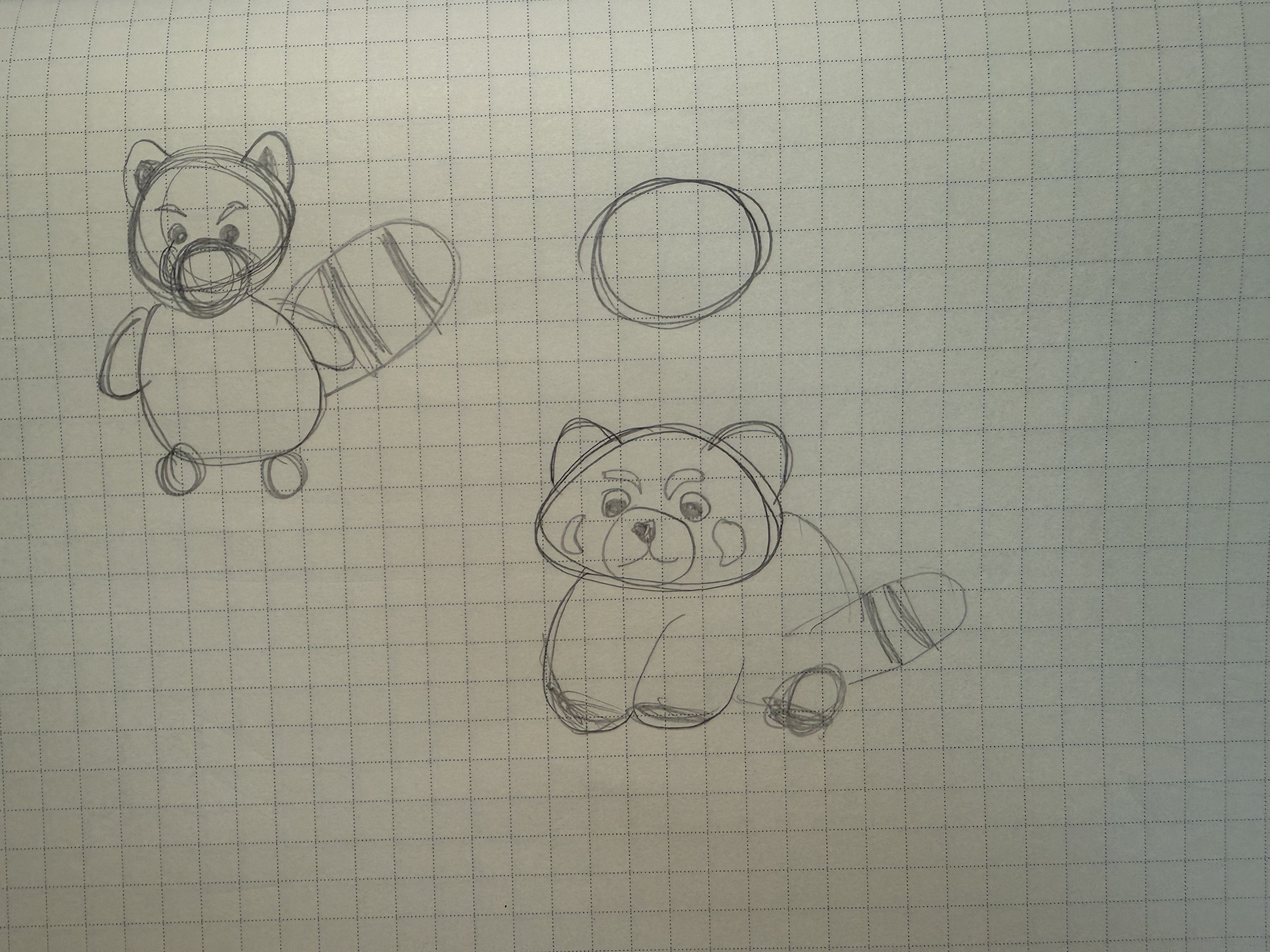
For the construction, I used the egg carton as the core body structure and the coffee carrier to shape the head. The facial expressions and ears were crafted from a coffee sleeve, while a tea box provided the material for the eyes and mouth. When my Amazon deliveries arrived, the paper packaging served as structural support and tail volume, and the plastic lid caps were repurposed to form the red panda's legs.
Of course, the making process came with plenty of struggles. Because my scissors and utility knife weren't sharp enough, I had to cut through the thick cardboard dozens of times just to get the right shapes. Gluing was another nightmare, pieces kept sliding off and refusing to bond, which was honestly so frustrating!
Looking back, this messy and challenging process brought me two major takeaways that completely changed how I think about design and sustainability.
First, I realized how much my initial impulse to buy easy clay mirrors our everyday consumption habits. We constantly consume and throw things away for the sake of convenience, without ever thinking about the ecological footprint—and that exact mindset is what drives the habitat destruction threatening species like the red panda.
Second, because of the limitations of my scrap materials, the final sculpture didn't turn out looking polished or what i've imagined. But as I struggled with it, I started to see a metaphor between the environment and the red panda i made: the rough textures, jagged edges, and imperfections of my sculpture accidentally mirror the fragmented, damaged environments these animals face in the wild.
Ultimately, this project really opened my eyes. Working with these scraps forced me to experience just how hard it is to deal with waste. It made me realize that my own careless habits contribute to the destruction of wildlife and nature out there, and that this damage eventually circles back to affect us all. True sustainability starts with changing our everyday habit of thoughtless consumption...If we start making these small changes and actions step by step, won't all animals and people eventually find themselves in a much better, healthier world..?
References